Loading

SharePoint developer, Canberra ACT
I am a Canberra-based senior SharePoint developer. I help businesses build, improve, automate and fix SharePoint and Microsoft 365 solutions, and when you engage MDT Software Development you deal with the developer doing the work.
Businesses do not search for technologies, they search for a way out of a problem. These are the ones I am usually called about.
Custom SharePoint development for Canberra businesses that have outgrown what the standard web parts can do.
SharePoint help for solutions that are broken, slow, out of date or built by somebody who has moved on.
Power Automate and Microsoft Graph work that removes the repetitive manual steps sitting between your people and their work.
A SharePoint developer on demand, for organisations that need the expertise but cannot justify a full-time hire.
A large consultancy is the right call for some engagements. For a lot of SharePoint work it adds layers you pay for and never speak to.
The person scoping the work, writing the code and answering your questions is the same person. Nothing is lost between an account manager, a solution architect and whoever ends up building it.
No project management office, no bench to keep busy, no minimum team size. The engagement is sized to the problem, whether that is two days or six months.
A question about your tenant gets answered by someone who has been in it, usually the same day, not routed through a ticket queue.
A single web part, a permissions clean-up, a full intranet. Small jobs are welcome, and large ones are delivered with the same discipline I used leading government intranet teams.
Plenty of organisations have a capable internal IT team that does not have a SharePoint developer in it. I slot in for the specialist work and hand over cleanly.
I do the solution design as well as the implementation, so the design is one that can actually be built in your environment, and the build matches the design.
I will not claim to be cheaper or faster than every consultancy on every job. What I can say is that you get a senior developer directly, with none of the layers in between.
For the technical buyers: the platforms and what they let me deliver.
Custom web parts, application customisers and field customisers built with the SharePoint Framework in React and TypeScript, using PnPjs for list and library access. This is how a SharePoint intranet gets the features the standard web parts do not have, without breaking when Microsoft updates the tenant.
Graph integration for people data, calendars, Teams, mail and files, so a SharePoint solution can draw on the rest of Microsoft 365 rather than duplicating it. Azure AD app registrations, permissions scoping and Azure Functions where a server-side component is needed.
Approval, document and notification flows in Power Automate, with REST APIs and connectors to reach systems outside Microsoft 365. Where a flow is the wrong tool, a small Azure Function or Graph-based service does the job instead.
Permission models that stay manageable, migrations from older SharePoint versions or other platforms into SharePoint Online, and modernisation of legacy SPFx or classic customisations onto supported patterns.
Interfaces that work on a phone and meet WCAG 2.2 AA, which every government client required and every business benefits from. Accessibility is built in from the first component, not audited in at the end.
Most of my SharePoint experience is inside Australian Government departments: large tenants, strict change control, accessibility obligations and thousands of users. That is the evidence that I can handle a complex environment, and a business intranet is a smaller problem than the ones below.
Technical and Development Lead
Software Development Lead at the Department of Foreign Affairs and Trade on an intranet serving thousands of users globally, built on SharePoint, SPFx, React and TypeScript with Azure integration.
Technical and Development Lead, 13 months
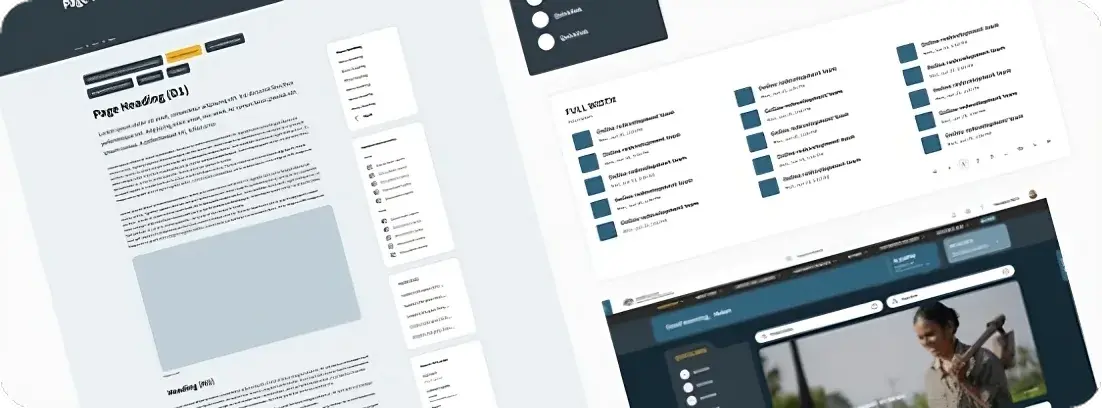
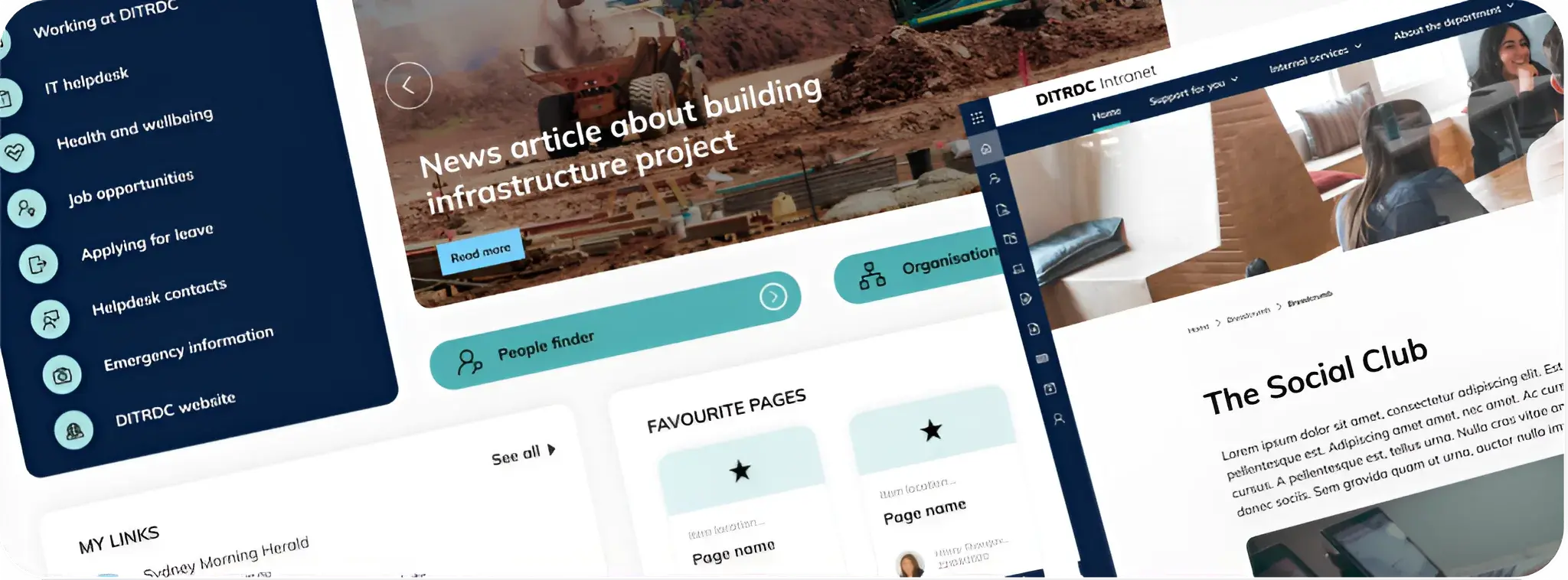
Led the SharePoint and SPFx build for the Department of Infrastructure, Transport, Regional Development, Communications and the Arts.
Development Lead, 9 months
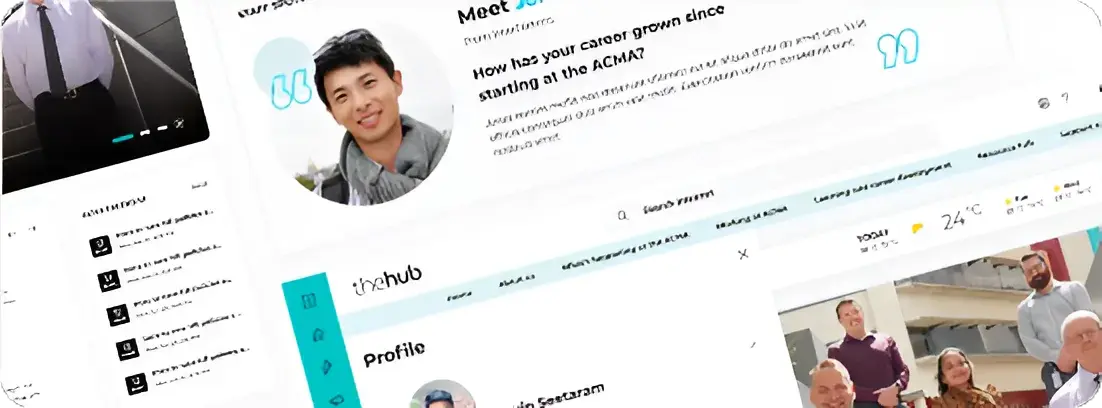
Led development of the Australian Communications and Media Authority intranet on SharePoint Online and SPFx.
Technical and Development Lead
SharePoint and SPFx development for the Australian Taxation Office, one of the largest Microsoft 365 tenants in the country.
Government case studies are published at the level the client permits. Ask and I can talk through what applies to your situation.
MDT Software Development is based in Canberra, ACT. Canberra businesses and organisations can work with me directly, on site where that helps and remotely where it does not. Organisations elsewhere in Australia get the same developer over Teams, and most SharePoint work suits remote delivery well. I do not run a network of offices, and I would rather say so than pretend otherwise.
I'm Jayden Marquardt, a Canberra-based senior full-stack and SharePoint developer. When you engage MDT Software Development, you're working directly with me.
SharePoint has been most of my working life since 2017. I have built and led intranet delivery inside Australian federal government departments, including as Software Development Lead at DFAT, and for the ATO, ACMA, the Fair Work Commission, the Fair Work Ombudsman and DITRDCA. That work was SharePoint Online, SPFx, React, TypeScript, Microsoft Graph and Power Automate in locked-down tenants with real accessibility and security obligations.
Outside SharePoint I build web and mobile applications, which matters when a SharePoint solution needs to talk to something that is not SharePoint. The wider software development work is on the services page and the portfolio.
The questions Canberra businesses ask before they hire a SharePoint developer.
It depends on the work. A short fix or a single web part is priced very differently from a full intranet build, and I quote each job on its scope rather than publishing a rate card. Working directly with a freelance developer removes the consultancy margin from the engagement, but I will not promise it is always cheaper. Send me what you are trying to do and you will get a straight estimate with the assumptions written down.
Yes. Small projects are welcome: one web part, a permissions clean-up, a broken flow, a day of advice. There is no minimum engagement size, and a small job done well is usually how a longer working relationship starts.
Almost always. Most work is in a tenant that already exists, with content, permissions and customisations that have accumulated over years. I start by understanding what is there before changing anything, and I work within your change control and governance rather than around it.
Yes, and it is often cheaper than rebuilding. Common jobs are SPFx solutions that stopped working after a tenant or Node update, web parts that are slow, permissions that have drifted, and code left behind by a developer or vendor who is no longer around. I will assess it honestly and tell you whether it is worth repairing or whether you are paying to maintain a dead end.
Yes. I have led intranet builds for government departments serving thousands of users, and a business intranet uses the same platform with fewer constraints. The build covers information architecture, the permissions model, the publishing process and any custom SPFx web parts, so the intranet is still usable when it has years of content in it.
Yes. Ongoing support can be a monthly retainer for small changes and fixes, ad-hoc development when something comes up, or a standing arrangement to back up your internal IT team. It gives you a SharePoint developer on demand without employing one.
Yes. I am based in Canberra and work with Canberra and ACT organisations directly, and I work remotely with organisations anywhere in Australia. SharePoint work suits remote delivery well, and everything happens in your Microsoft 365 tenant regardless of where I am sitting.
SPFx is the SharePoint Framework, Microsoft's supported way to write custom code that runs inside SharePoint Online and Microsoft Teams. It is built with TypeScript and usually React. You need it when the built-in web parts cannot do what the business needs. You do not need it for a site that out-of-the-box features already cover, and I will say so if that is the case.
Yes. Approvals, document workflows, notifications, scheduled jobs and hand-offs between teams are built with Power Automate, and with Microsoft Graph or Azure Functions where a flow is the wrong tool. The aim is to remove the manual steps and the email chains, not to add another system people have to check.
Yes. SharePoint can be connected to finance, HR, CRM and line-of-business systems through Microsoft Graph, REST APIs, Power Automate connectors and Azure integration. Which one is right depends on the system, the volume of data and how current it needs to be, and that is part of the solution design.
Yes. That includes migrating classic or on-premises SharePoint customisations to SharePoint Online, upgrading old SPFx solutions to the current framework, and replacing unsupported patterns with supported ones so the solution survives Microsoft's updates.
Usually both, and with MDT they are the same person. A consultant works out what should be built and how it fits your organisation; a developer builds it. Splitting the two across a consultancy is where designs that cannot be built come from. I do the design and the build, so the advice is grounded in what will actually work in your tenant.
Whether you have a SharePoint problem, an idea you need built, a messy environment you inherited, an IT team that needs specialist help, or ongoing work without another hire, the next step is the same.